25 Aug 2026
Bet Builder Mechanics: Structuring Multi-Leg Options in UK Sportsbooks
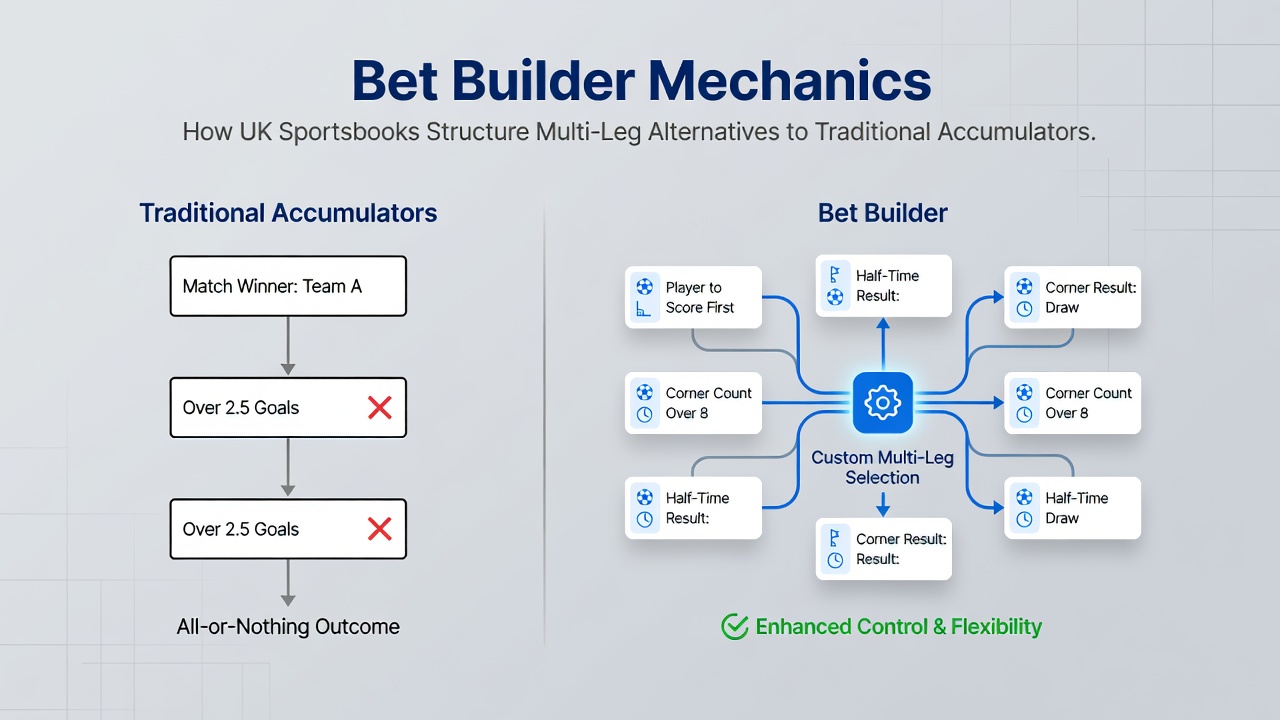
UK sportsbooks have refined bet builders into structured tools that let users combine several outcomes from a single event, creating an alternative to traditional accumulators that span multiple fixtures. These systems pull from live data feeds and pre-set parameters so each leg carries its own odds multiplier, then the platform multiplies those figures together to generate a final price while applying caps on maximum legs or stake limits to manage exposure.
Core Components of Bet Builder Construction
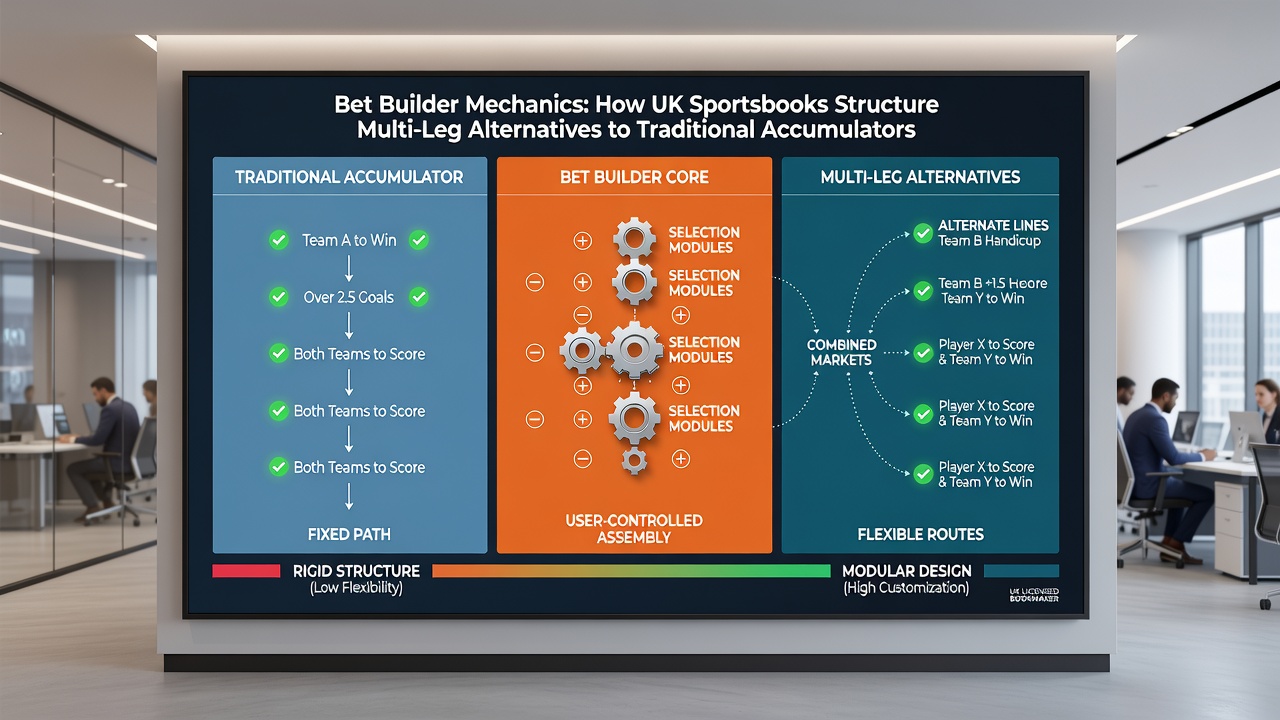
Operators define available legs through templates that cover player performance metrics, team totals, and match events such as corners or cards. Software engineers integrate these templates with real-time APIs from data providers, ensuring that when a user adds a leg the system recalculates odds instantly and flags any incompatible combinations that breach internal risk rules. Data from industry reports shows this process typically limits selections to between three and six legs per bet builder to keep payout calculations stable.
Bookmakers also embed conditional logic that prevents double-counting correlated outcomes, for instance blocking simultaneous selection of both a player to score and the team to win by a specific margin when those events overlap too closely. This logic runs through backend algorithms that reference historical correlation matrices updated monthly, a practice documented in technical overviews published by gaming technology firms.
Comparison to Traditional Accumulator Structures
Traditional accumulators require outcomes from separate matches or events, whereas bet builders keep every leg within one fixture and draw on granular statistics. The structural difference means bet builders generate higher volumes of smaller-stake wagers because users can build combinations without waiting for multiple games to conclude. Figures from European betting analytics firms indicate that bet builder handle has grown steadily since their introduction, partly because the format reduces the number of void legs that occur when one match in an accumulator is postponed.
Odds Calculation and Risk Controls
Each leg receives an odds value derived from the bookmaker’s base probability model adjusted for margin. The platform multiplies these values and then applies an additional margin or rounds the final price to maintain house edge consistency. Risk teams monitor aggregate liability across popular matches, setting per-market caps that automatically adjust during high-volume periods such as August 2026 when Premier League and European competitions overlap.
Operators further protect margins by introducing tiered payout limits that scale with the number of legs selected. A three-leg bet builder might carry a higher maximum payout threshold than a five-leg version, a policy that appears in operator terms across several major platforms. These thresholds are reviewed quarterly and can shift in response to observed betting patterns.
Integration With Broader Betting Platforms
Bet builders sit alongside cash-out features and in-play editing tools, allowing users to add or remove legs before the event starts or, in some cases, during the match if the operator permits mid-event modifications. The same backend pricing engine that powers these builders also feeds data to mobile apps, ensuring consistency between desktop and handheld interfaces. Technical documentation from platform providers highlights that this shared engine reduces latency and keeps settlement times under two minutes once an event concludes.
Regulatory Context and Reporting Requirements
UK operators report bet builder volumes as part of broader product data submissions to oversight bodies outside the domestic commission structure. Comparable frameworks in jurisdictions such as those covered by the Australian Gambling Research Centre require similar disclosure of multi-leg product usage. These reports help regulators track whether bet builders increase overall session length or average stake size compared with single-event wagers.
Operators must also maintain audit trails that record every leg selection and odds change, a requirement that aligns with standards promoted by the Responsible Gambling Council in Canada. Compliance teams use these logs during internal reviews and external audits to verify that advertised maximum payouts and leg restrictions remain accurate.
Conclusion
Bet builder systems in UK sportsbooks rely on modular leg selection, real-time pricing engines, and correlation controls to deliver multi-outcome bets confined to single events. These mechanics differ from accumulator structures in scope and settlement speed while sharing the same underlying multiplication of odds. Ongoing adjustments to leg limits, payout caps, and integration features reflect operational responses to volume patterns and external reporting obligations. As platforms continue to refine these tools through August 2026 and beyond, the core architecture remains focused on balancing user flexibility with controlled risk exposure.